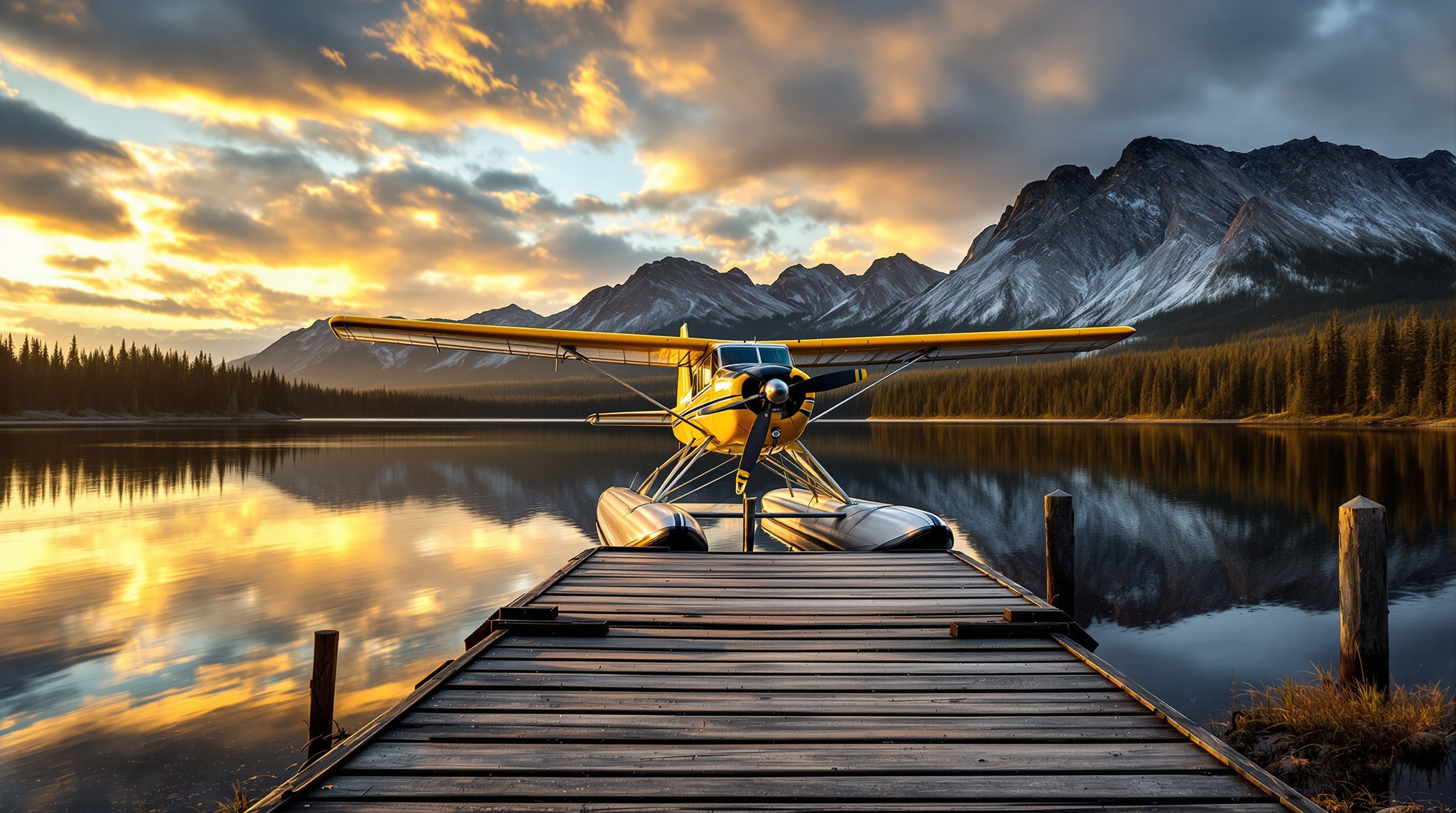
Somewhere north of the last road, past the reach of cell towers and the hum of the highway, there is a lake that sees only a handful of anglers each summer. Reaching it means climbing into a floatplane, watching the boreal forest unfold beneath the wings, and setting down on water that has barely changed in ten thousand years. That is the promise of Canadian fly-in fishing, and this guide exists to help you understand it.
This is an independent, informational resource about fly-in fishing in the Red Lake district of Northwestern Ontario. We are not a lodge, an outfitter, or a booking service. Instead, we cover the things a curious angler actually wants to know before planning a remote trip: what fish you will find, how floatplane access works, which gear and techniques matter on wilderness lakes, when the seasons open, and how to fish responsibly in one of the last great freshwater fisheries on the continent.
What "Fly-In" Really Means
A fly-in fishing trip trades roads for wings. The remote lakes of Northwestern Ontario have no bridges, no boat launches, and no shoreline development. The only practical way in is a bush plane on floats, taking off from a float base such as Red Lake and landing directly on the destination lake. Once you are there, you are genuinely remote: a cabin on the shore, a boat and motor waiting at the dock, and a horizon of spruce and granite in every direction.
That isolation is the entire point. Because these lakes see so few anglers, fishing pressure stays low and fish populations stay healthy. It is not unusual to release dozens of walleye in a single day, or to hook a northern pike longer than your leg. For many visitors the fishing is only half the appeal; the other half is the profound quiet of a place where the loudest sound is a loon calling across still water at dusk.
The Fish of the North
The headline species of the region are walleye and northern pike, with yellow perch and, on some waters, lake trout rounding out the catch. Walleye are prized for the table and for their sheer numbers; pike are the wilderness predator that makes a reel scream. Our species guide breaks down each fish in detail, and the techniques page explains how to catch them once you find them.
Getting Started
If you are new to the idea of a remote Canadian fishing trip, the sections of this guide are designed to be read in any order. A good starting point is understanding what a fly-in fishing trip involves, followed by the practicalities of floatplane travel and trip planning. If you are already an experienced angler, jump straight to tackle and gear or the regional overview of the Red Lake wilderness.
Throughout, the emphasis is on conservation and responsible angling. Remote fisheries are resilient but not infinite, and the catch-and-release ethic that has kept these lakes productive for generations depends on every visitor doing their part. For official rules, seasons and licensing, we point you to the Ontario government's fishing resources rather than restating regulations that change from year to year.
What the Trip Asks of You
One thing first-timers rarely budget for is the physical side. A fly-in week is not an expedition, but it is long: early starts, full days in an open boat, gear carried by hand between dock and cabin, and weather that makes every job take twice as long. Parties fishing connected lakes add short portages. None of it is beyond an ordinary fit adult, but arriving with a few months of regular walking behind you changes how the last two days feel. Our guide to preparing for a fly-in week covers that alongside the licences, the packing weight and the safety kit.
An Honest Note
Because these waters are wild, no guide can promise you a specific catch, a specific lake, or a specific week. What we can do is help you arrive prepared, respectful, and genuinely excited for one of the finest freshwater fishing experiences left in North America. Read on, and start dreaming about that first landing on a lake with no name you have ever heard.