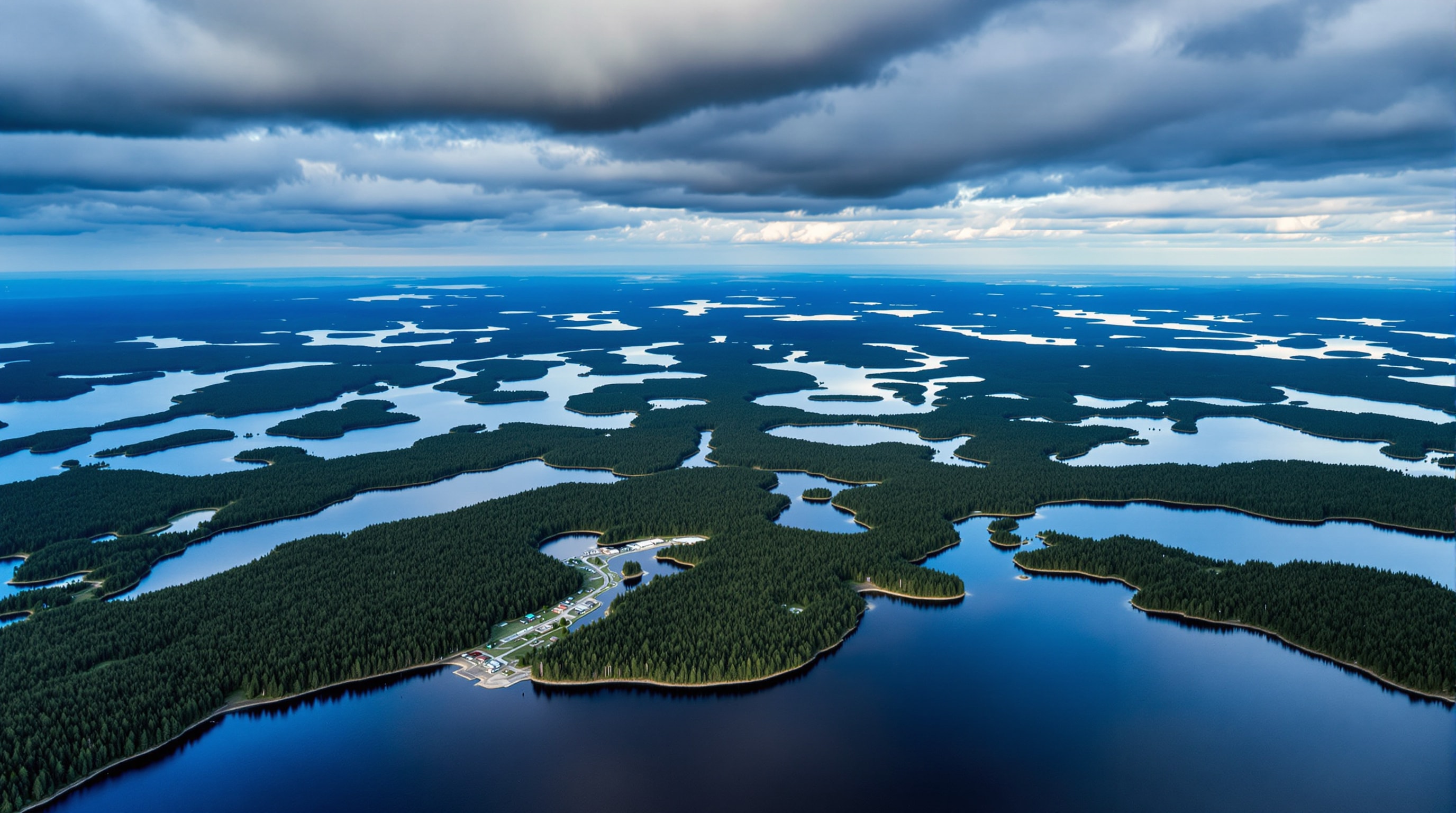
Every fly-in fishing trip in this part of the country begins with a place name: Red Lake. This small community in Northwestern Ontario is one of Canada's great floatplane gateways, the jumping-off point for a wilderness that stretches, roadless, for hundreds of kilometres. Understanding the region deepens any trip you take into it.
A Gateway Built on Gold and Wings
Red Lake owes its existence to a dramatic chapter of Canadian history. In 1926 the discovery of gold set off the Red Lake Gold Rush — famous as the first gold rush in which prospectors flew to their claims by airplane rather than travelling overland. For a time the local float base was one of the busiest in the world by aircraft movements. That aviation heritage never left; the same skies that once carried prospectors now carry anglers, and the floatplane remains the symbol of the town. The legacy is a community shaped for a century by bush flying and the northern frontier.
Woodland Caribou and the Boreal Shield
West of Red Lake lies Woodland Caribou Provincial Park, a vast roadless wilderness of clear lakes, granite ridges, and jack-pine forest that shares its ecology with the fly-in country all around it. This is the boreal shield: ancient Precambrian rock scoured by glaciers and dotted with tens of thousands of lakes. The water is clean and cold, the forest is largely untouched, and the sense of scale is difficult to convey to anyone who has not seen it. It is one of the largest intact forest ecosystems remaining on the planet.
Wildlife of the North
The remote lakes are alive with wildlife, and part of the reward of fishing here is what you see between casts. Bald eagles patrol the shorelines and ospreys dive for fish. Loons call across the water and nest in quiet bays. Otters and beavers work the margins, and it is common to spot a moose feeding in a shallow bay at dawn or dusk. The region is also home to black bear and, further into the backcountry, the threatened woodland caribou that gives the park its name. Travellers should treat all wildlife with respect and distance.
Rivers and Heritage Waters
The country is laced with storied rivers. The nearby Bloodvein River is a designated Canadian Heritage River, prized by wilderness canoeists for its clear water, pictographs, and untouched shorelines. These waterways connect the lakes into a living network and underscore how wild this landscape remains. Even as a visiting angler, you are travelling through a place of deep natural and cultural significance.
A Living Wilderness
What makes the Red Lake region special is not any single lake but the sheer, uninterrupted wildness of the whole. Fly an hour in any direction and the forest simply continues, lake after lake, with no roads and few people. That is why the fishing is so good and why the experience stays with people for a lifetime. To make the most of a visit, read our guides to the fly-in experience and planning your trip.