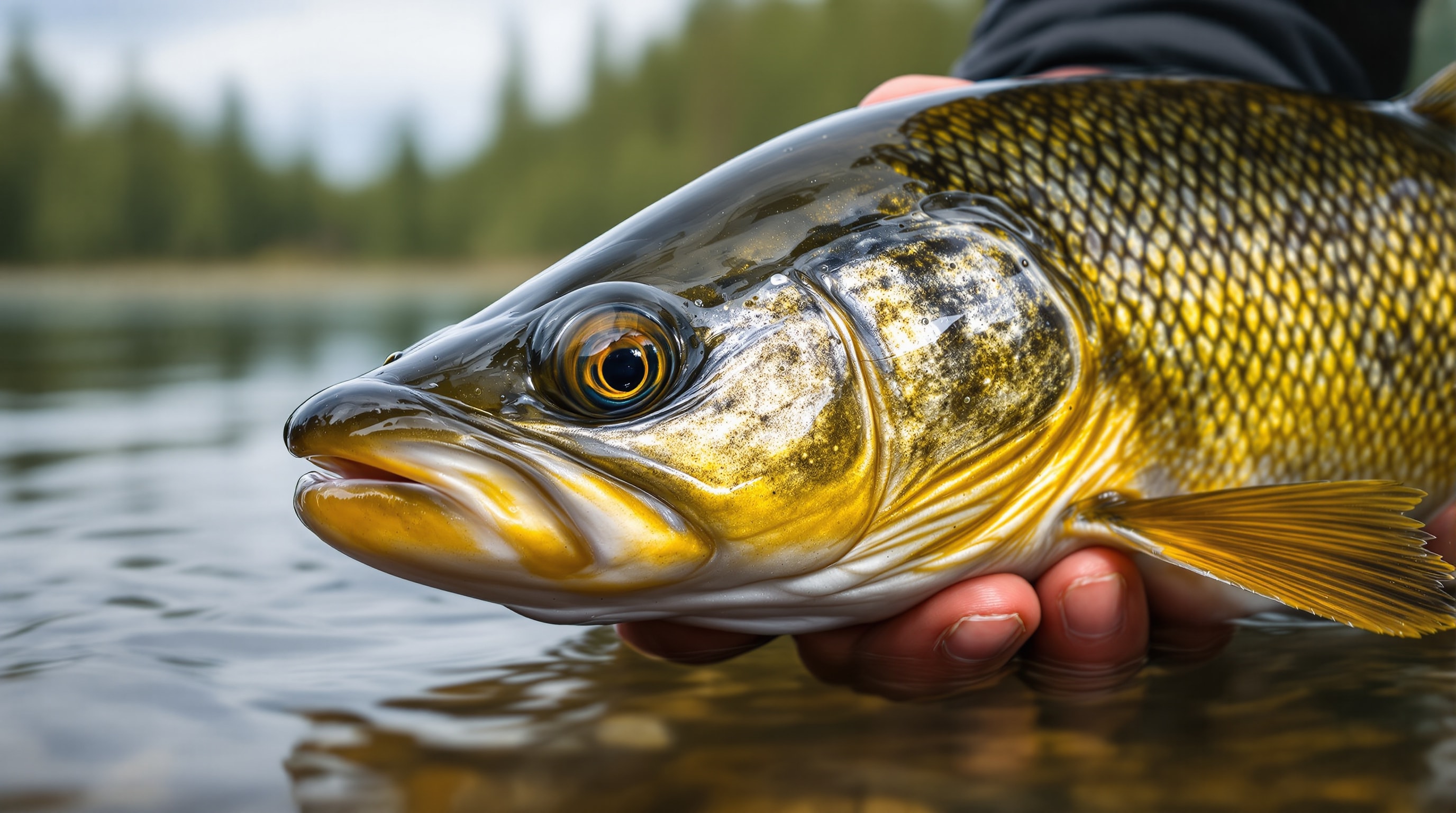
The remote lakes of the Canadian shield hold a handful of freshwater species that have defined northern fishing for generations. Knowing their habits, their seasons, and the water they prefer is the difference between a slow day and the kind of fishing people talk about all winter. This guide profiles the four fish you are most likely to meet on a fly-in trip.
Walleye: The Northern Prize
The walleye is the fish most anglers travel north to catch. Named for its large, light-gathering eyes, it is superbly adapted to low light and often feeds hardest at dawn, dusk, and under a chop that dims the water. Walleye relate closely to structure: gravel and rock points, the edges of weed beds, current in narrows, and drop-offs into deeper basins. In summer they follow the thermocline and their forage, moving shallow to feed and dropping back to rest.
On lightly fished wilderness water, walleye are abundant and cooperative. Anglers routinely release both "eaters" in the fifteen-to-eighteen-inch range and genuine trophies past twenty-eight inches. Because slot limits and possession rules protect the breeding-size fish, most visitors keep only a modest shore-lunch portion and release the rest. The Fisheries and Oceans Canada species profile offers a good primer on walleye biology.
Northern Pike: The Water Wolf
If the walleye is the prize, the northern pike is the thrill. This long, torpedo-shaped ambush predator lurks in weedy bays and along cabbage edges, exploding on anything that looks like prey. Pike grow large and fight with sudden, violent runs; a big northern on the end of the line is one of freshwater's great fights. Early season, when pike hold shallow after the spawn, is prime time for numbers, while the largest fish often move to cooler, deeper edges as summer warms.
Pike demand respect at the boat: sharp teeth and a thrashing temperament make a jaw spreader, long pliers, and a proper cradle net essential. Handled well and released quickly, they survive to grow larger still. Our techniques page covers the spoons and bucktails that pike cannot resist.
Yellow Perch
Often overlooked, the yellow perch is a delight in its own right. Schooling and willing, perch keep young anglers busy and make outstanding table fare. They share the walleye's taste for structure and are frequently caught alongside them, especially over gravel flats and near weed edges. On many lakes a mixed bag of walleye and perch is the classic shore-lunch combination.
Lake Trout
Some deeper, colder lakes in the region also hold lake trout, a fish of clear, cold water that retreats to depth as the surface warms. In the days just after ice-out, lake trout cruise the shallows and can be taken near the surface; through summer they hold deep and reward anglers willing to fish down for them. A lake trout is a bonus species on many trips and the main event on a few specialized waters.
Reading the Water
Across all four species, the same principle applies: find the structure and you find the fish. Points, narrows, weed edges, inflows, and the transition between rock and sand concentrate feeding fish. A little time with a lake map and a fish finder pays off quickly. Once you know what you are chasing, turn to our guides on tackle and seasonal timing to put it together.