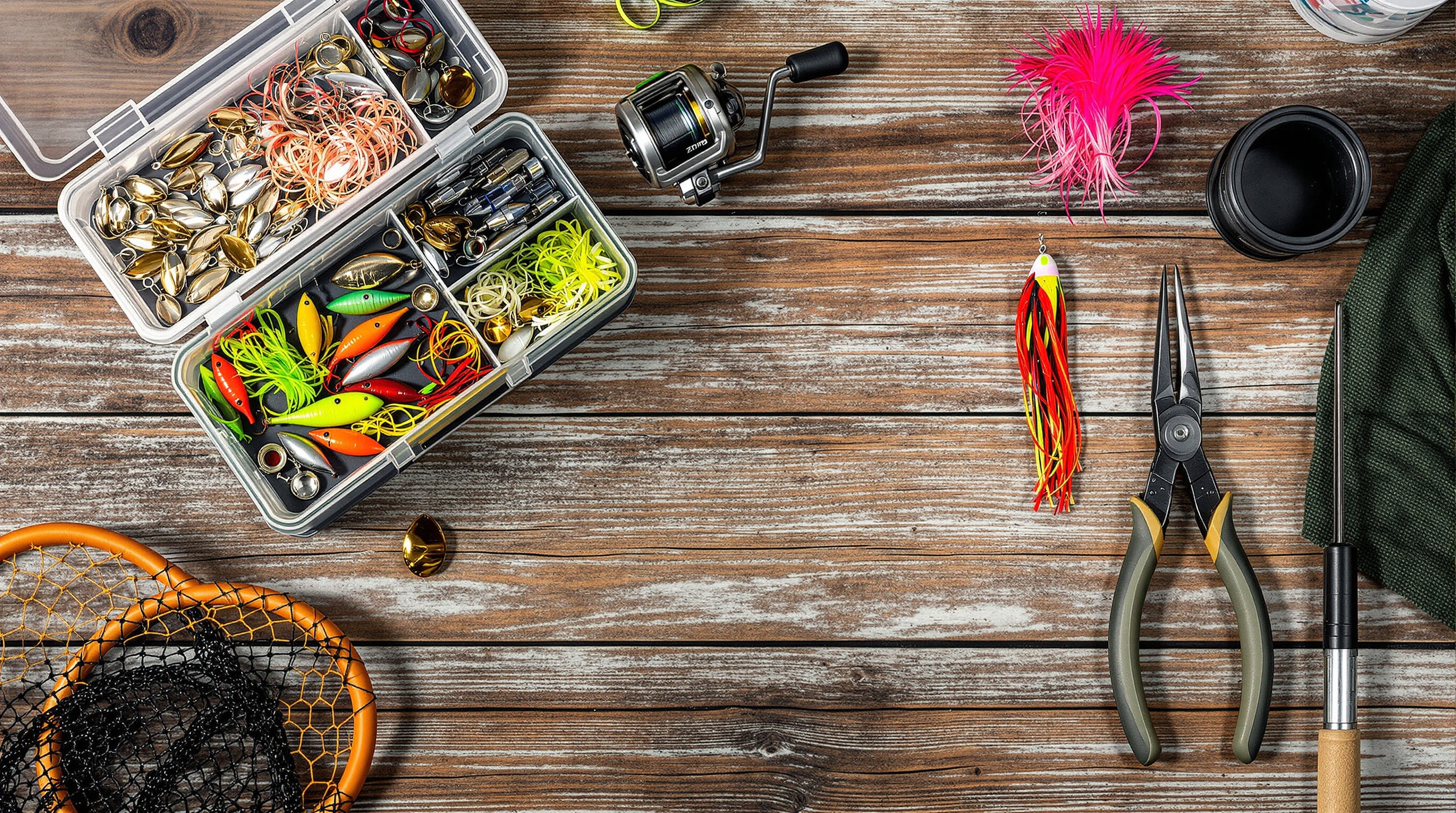
On a remote lake there is no tackle shop to bail you out, so what you pack is what you fish with all week. The good news is that wilderness walleye and pike are not fussy; a compact, well-chosen kit covers almost everything the north throws at you. This guide walks through the essentials without the clutter.
Rods and Reels
Two combos handle the vast majority of fly-in fishing. A medium spinning outfit in the six-and-a-half to seven-foot range, spooled with eight-to-ten-pound line, is your walleye and perch workhorse: sensitive enough to feel a light bite, forgiving enough for all-day casting and jigging. For northern pike, step up to a medium-heavy rod and a reel that holds heavier line, giving you the backbone to move a big fish out of the weeds. Bring at least one spare rod per angler; travel is hard on gear and a broken tip on day one should not end your fishing.
Line and Leaders
Monofilament in the eight-to-twelve-pound class is a dependable all-rounder, while many anglers prefer a braided main line with a fluorocarbon leader for sensitivity and abrasion resistance around rock. For pike, a wire or heavy fluorocarbon leader is non-negotiable: those teeth slice through light line in an instant. A common setup pairs twelve-to-fourteen-pound test with a steel leader for northerns while keeping a lighter, leaderless rig ready for walleye.
Lures That Earn Their Place
You can fish an entire trip out of one modest tackle box. The proven producers are:
- Jigs (quarter- to three-eighths-ounce) tipped with soft-plastic twister tails or minnow bodies — the number-one walleye tool.
- Spinners and spinner rigs with flashers, worked slowly for walleye along structure.
- Minnow-style crankbaits for covering water and triggering active fish.
- Spoons in silver, gold, and red-white for pike.
- Bucktails and large spinnerbaits for burning over pike weed beds.
Pack a range of weights and a few colour options for changing light and water clarity, but resist the urge to bring everything; a focused box fishes better than an overflowing one. Our techniques guide explains how to fish each of these.
The Landing and Handling Kit
Responsible catch and release starts with the right tools at the boat: a rubber-mesh landing net that protects slime coats, long-nose pliers or a hook-out for quick releases, a jaw spreader for pike, side cutters in case a hook must be cut, and a lip grip or cradle for photos. Barbless or pinched-barb hooks speed release and reduce harm. See our conservation page for handling that keeps fish healthy.
Beyond the Tackle Box
A few non-fishing items make or break a remote trip. Polarized sunglasses cut glare and help you read structure. A quality rain suit is essential; northern weather turns fast. Layered clothing handles mornings that start near freezing and afternoons in the sun. Add a headlamp, a small first-aid kit, sunscreen, and serious insect protection for black flies and mosquitoes. For the complete list, including licensing and provisions, head to our trip-planning guide.
Spares, Repairs and the Small Stuff
Because nothing can be replaced once the plane leaves, a handful of spares is worth their weight many times over. Carry extra spools of line, a pack of jig heads in your two most-used weights, spare hooks and split rings, a few leaders already tied, and the reel oil and hex key that fit your drag. Electrical tape and a couple of zip ties will splint a cracked rod guide or hold a loose seat together for the week. Keep spare batteries in a dry bag — cold mornings drain them faster than you expect — and divide critical items between two bags so one lost duffel does not end anyone's fishing.
Keep It Simple
The theme of fly-in gear is deliberate simplicity. Two rods, a leader system, a tight selection of jigs, spoons, and spinners, and a proper release kit will out-fish an overloaded boat every time. Pack smart, protect your gear in transit, and you will spend the week fishing rather than fixing.